



 Back to cases
1987 – The Caisse d’Épargne heist: escape through the sewers
Twenty years ago, the war between two great police officers, full of courage and pride, handed the advantage to a gang of seasoned robbers who made fools of them both. On one side, Superintendent Georges N’Guyen Van Loc, then head of the Marseille national police intervention group (GIPN), respected and feared by the local underworld, a loudmouth who ended up re-enacting his exploits on television in the series “le Chinois”. On the other, Superintendent Robert Broussard, former head of the anti-gang squad in Paris, who had resolved sixty hostage situations and hunted “public enemy number 1” Jacques Mesrine to the end, under a hail of bullets, in 1979. On 9 February 1987, the Marseille man and the Parisian clashed over the heist at the Caisse d’Épargne savings bank in La Blancarde, Marseille.
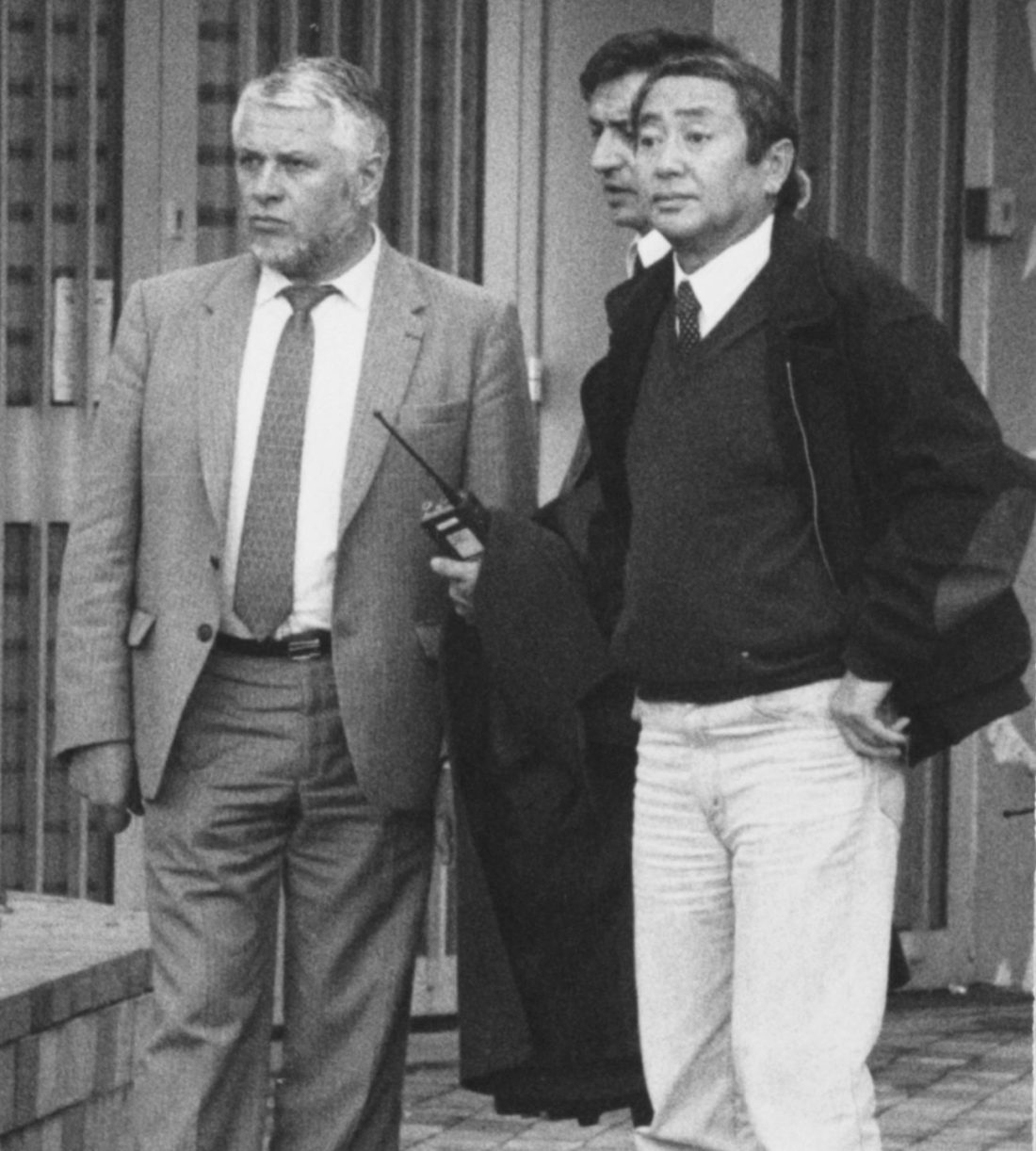
At 8 a.m., robbers entered the branch, struck a security guard and barricaded themselves inside with 14 customers and 9 employees. First on the scene, Superintendent Van Loc, who always warned criminals that “death is one of the risks of the job”, telephoned the gang leader. The reply: “Go fuck yourself.”
The hot-headed GIPN chief requisitioned 300 officers to surround the bank. The robbers’ zeal for the job puzzled Inspector Gérard de Fabritus: “You could hear the chisels, the angle grinders, the hammer blows, the sledgehammers. How, with 300 police officers standing there in a circle, could these people carry on breaking open the safes? It seemed incredible.” Even if this well-to-do branch had 2,000 safe deposit boxes. The hostage-takers then demanded a ransom of 30 million francs (€4.5 million).
As usual, Van Loc went for heavy-handed measures. He asked for the sewer plans, two helicopters and two armoured vehicles. According to José d’Arrigo, a journalist at Le Provençal who had witnessed the “Chinaman” in action in Marseille and Nice, this “extremely brave, sometimes reckless man always resolved dramatic situations by freeing the hostages and sometimes, when necessary, by killing the criminal”. But given the scale and duration of the hostage-taking, the prefect decided to call in the brand-new elite unit, Ange Mancini’s RAID, commanded for the occasion by the famous Superintendent Broussard, who had become director of urban police forces.
From the outset, cooperation between the Marseille and Paris units looked difficult. As soon as he landed at Marignane, the head of the RAID heard about “the gnashing of teeth, to put it mildly, of the ‘Chinaman’, who could not accept having been taken off the case”. The Le Provençal journalist recalls: “Van Loc saw calling in Robert Broussard as a personal attack. As if he, N’Guyen Van Loc, were not capable of solving the problem on his own with his men. He felt a kind of personal humiliation.” Broussard tried to calm things down and took Van Loc aside: “Listen, be reasonable, I understand, but we’ll do something together, we’ll set up mixed teams.” “At the time he said ‘all right’,” the journalist continues, “it calmed him down a bit. But he stayed in his corner, absolutely refusing to propose or suggest anything. He was sulking.” According to José d’Arrigo, Van Loc “is a man of order who cannot bear authority”. Now he was “offended” by the Parisians’ “haughty arrival”.
The RAID took charge. For Superintendent Ange Mancini, “Van Loc had no strategy at that point. He was like a kid in a toy shop. He was waiting for the money to be brought in so he could go after the robbers and chase them by helicopter. That’s not strategy. That was improvisation.” José d’Arrigo compares the police squabbles to a football match: “It’s Marseille versus Paris Saint-Germain. OM–PSG, you see. Except that here it’s serious, because there are 23 hostages.”
Broussard made contact with the robbers, who demanded the 30 million within the hour. In the afternoon, an informant tipped off the gendarmes that “the guys may escape through the sewers”. Broussard sent police officers with sewer workers into every tunnel running near the Caisse d’Épargne to make sure that no passage was connected to the bank’s basement: “I asked for every manhole cover to be lifted and checked. And every time, there was nothing, nothing, nothing.” The officer then concluded that the tip-off was false.
Night fell over Marseille. The negotiations remained hopelessly deadlocked. Broussard had no hold over these gangsters and felt they were “not ready”: “Something else was starting to worry me seriously: we could still hear banging.” Ange Mancini was no clearer about what was going on inside: “They’d been hammering for I don’t know how long. What were they doing in there? It bothered us.” Police officers and journalists, such as José d’Arrigo, prepared to spend the night: “We bought sandwiches, everything we needed to settle in for the night and watch the final assault, a bit like a show.”
At 7 p.m., the robbers asked the hostages to help them seal up the windows, and a few strong men to break open safes: “Come on, put your backs into it.” The hostages set to work. Until both groups realised that the robbers had deserted the bank. At 7.25 p.m., the branch manager came out with a white flag in his hand. “Amazement, you see. A moment of intense amazement among the journalists, the public and the police,” says d’Arrigo. Dismayed, Broussard then realised “the scale of the disaster”.
The disaster was that the robbers had already fled twenty minutes earlier with three sports bags filled to the brim with jewellery, gold bars and banknotes taken from 276 safe deposit boxes. Right under the noses of France’s greatest police officers. They first followed the 32-metre tunnel they had spent two months digging between the bank and the sewers, walked several hundred metres along the tunnel the police had inspected, then reached the main sewer. There they inflated a rubber dinghy to carry the loot, estimated at 10 million francs (€1.5 million), and finally emerged into the open air three kilometres away.
In a cubbyhole behind the vault, investigators found a hole leading into a tunnel dug and shored up by a mason. With great care, the “moles” had fitted a metal door to seal the entrance to the passage and smeared it with mud. Inspector Fabritus remembers “that they had daubed it with earth, up to three metres either side, so that you could no longer see the gaps at all. So when people say the police were bad, it’s true we weren’t brilliant. But who could have imagined that under this six-metre-wide stain there was a door into a tunnel?” Another feat by the robbers, this time a strategic one: making the police believe it was an amateur hold-up gone wrong. They deliberately roughed up the security guard so that they would be surrounded and could then gather their loot. All day long, the burglars were one step ahead.
The next day, the newspapers ran headlines about the police’s failure and the exploit of Marseille’s “sewer gang”. Even the American press. One reader, Albert Spaggiari, on the run in the United States after the “heist of the century” he had pulled off in Nice in 1976, had his signed photo published in Paris Match to claim royalties from the Marseille sewer gang for copying him. A snub to the police. Among the police, scores were settled, Van Loc’s words against Broussard’s statements.
Worse still, the war resurfaced seven years later, in 1994, at the trial of the twelve criminals before the Aix-en-Provence Assize Court. Thanks to an informant’s tips, the gang’s two alleged masterminds, Christian Checchi, a taciturn and irascible figure of the Marseille underworld, and Stéphane Lanza, a poker player who ran illegal slot machines, had been caught in Spain six months after the heist, in possession of stolen jewellery and stones. Then the ten others, who were handling either gold coins or handguns, were locked up. The lawyers chose to admit the handling of stolen goods, but not the heist. Their strategy: to dismantle the investigation led by a vengeful judge determined to wipe out the affront to the police. Gilbert Collard thus pointed to “the inability to heal a narcissistic wound throughout the investigation, the laughter ringing [.] in the ears of the police and the judge. This feeling of having been made fools of would drive them to relentlessness”. The lawyer had Van Loc called as a witness, sure to “cause a circus” with Broussard: “The more I managed to ridicule the police, the better my clients did.” Collard knew the “Chinaman” would come to the trial “to have it out” with Broussard.
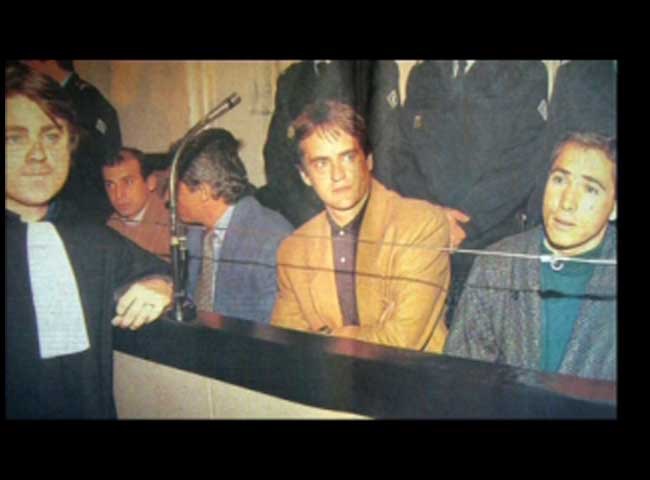
Indeed, on 7 February 1994, Van Loc called the super-cop a “joker” before the Assize Court, “a joker in Marseille, a joker in Paris”. “They escaped through the unguarded sewers. I would have put a police officer with a gun at every manhole. Broussard hadn’t understood a thing. He was about to launch the assault. There nearly was a massacre. And then, by God, Broussard panicked and dropped his gun while running, in front of my men,” testified the “Chinaman”, who drew his own moral from the story: “Marseille affairs are for the Marseillais.” Broussard, who had become a prefect, “fully accepted responsibility for this failure” at the witness stand, but returned the ball: “No one in charge was sidelined in this case. No one in charge proposed another strategy or other solutions.” This quarrel between the chiefs, combined with the informant’s absence from the trial and the judge’s mistakes, had a disastrous effect on the jurors. In the end, it was the twelve accused who won the Van Loc–Broussard match: all were acquitted of the Caisse d’Épargne heist and the hostage-taking by the Aix-en-Provence Court of Appeal.
Philippe Vouland defended one of the main defendants. He shared the bar with Michel Pezet, Gilbert Collard and Jacques Mazella Di Bosco.
This summary is based on an article in Libération, available here (in French): Link to the article